
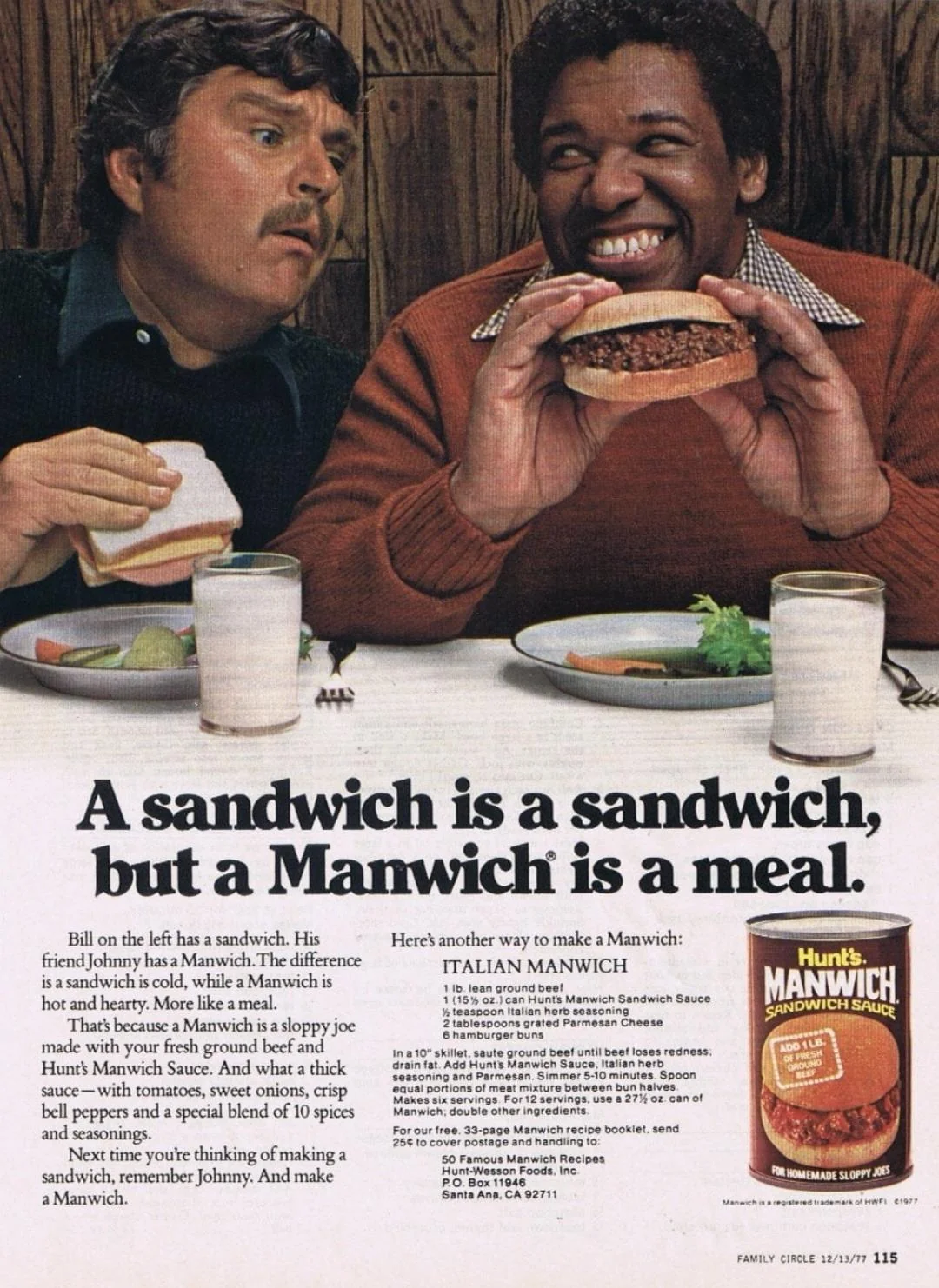
A sandwich is a sandwich. But a Manwich is a meal.
I can still hear that line. I was a kid when those ads ran, and it lodged somewhere permanent the way almost no advertising does.
Here is what I did not understand until I had spent a career doing this: that one sentence was not selling sauce in a can. It was selling permission.
Rewind to 1969. Hunt’s launches Manwich, a canned sloppy joe sauce you brown with ground beef. One pan, dinner in twenty minutes. On paper it should have flown off the shelf. More women were working, every household wanted convenience, and here was convenience in a can.
But there was a barrier nobody said out loud. In that era a mom was still quietly judged by the dinner she put on the table, and serving a “sandwich” for dinner felt like cutting a corner. It felt like less than. The product solved the practical problem and handed her an emotional one in its place.
So the brand did something I still think is quietly brilliant. It did not argue with the guilt. It renamed the moment. A sandwich is a sandwich, but a Manwich is a meal. Now she was not serving her family a shortcut, she was serving them a meal, with a name hearty enough to belong at the table. The guilt had nowhere left to stand.
I watched the same thing up close years later. About fifteen years ago I sat in on a run of focus groups for Kool-Aid, all moms. What surfaced, over and over, was not flavor and it was not price. It was guilt. These women could not give their kids everything the other kids had, and they felt that deeply. Kool-Aid was one small, affordable thing they could hand their kid that put a real smile on their face. That was the entire job. Not sugar. Permission to feel like a good mom in a moment that was actually within reach.
That has stayed with me longer than any framework I have ever been handed.
The best brand work rarely invents a new desire. It finds something people already want, or already quietly do, and it clears away the thing making them feel bad about it. Understand your consumer well enough to see the guilt, the fear, the small shame they are carrying into the aisle. Then give them permission to set it down.
That is most of the game. The rest is packaging.
Permission Granted is a weekly series on the old campaigns I grew up with and what they still get right.